
Not the five best engines ever built — the five that earn their place for a mix of history, mechanical audacity, and the sheer noise they make. Reciprocating, rotary, and gas turbine, spanning a Spitfire to a Fulvia. In no particular order except the one they occurred to me in.
01Rolls-Royce Merlin
The Merlin is the closest thing the piston aero-engine has to a founding text. It went into service in the late 1930s producing around 1,000 horsepower and left service in front-line piston fighters in the early 1950s producing close to double that, from essentially the same 27-litre V12 block.
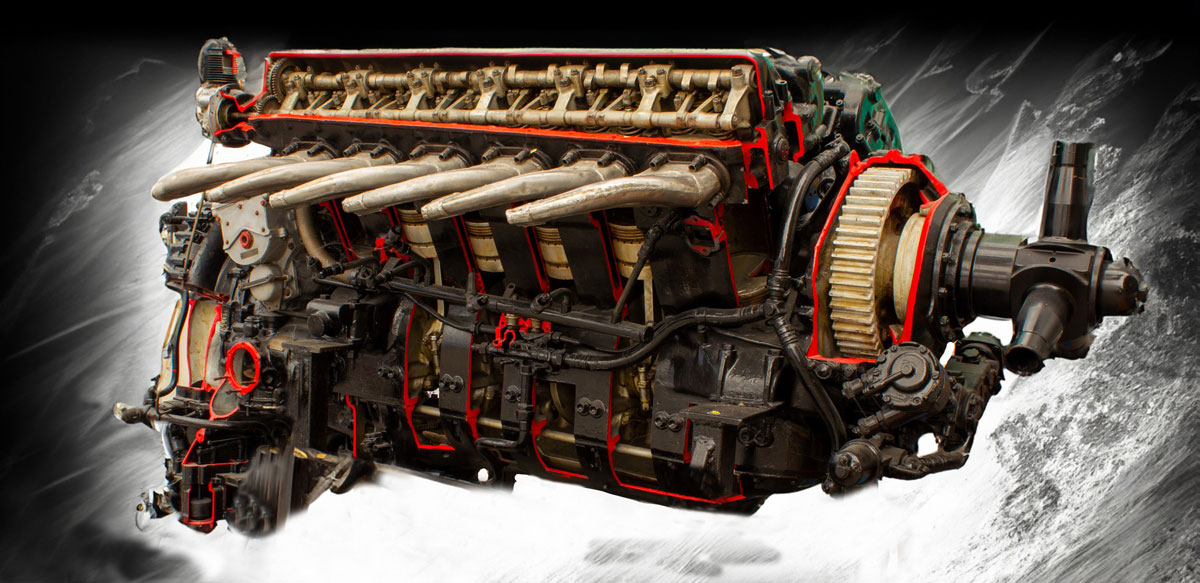
The story is one of relentless, iterative reinforcement: strengthen a component until something else fails, strengthen that, repeat. Supercharger development, two-stage and two-speed, did as much for the Merlin’s late-war performance as anything in the block itself, letting it hold power at altitudes the early versions never touched.
It powered the Spitfire, Hurricane, Lancaster, Mosquito, and — built under license by Packard in the US — the P-51 Mustang. Rolls-Royce eventually handed the top-of-the-line fighter role to its bigger sibling, the Griffon, but the Merlin’s decade of continuous uprating is arguably the high-water mark of piston aero-engine development, arriving just before the whole field moved to the gas turbine. Configuration60° V12, liquid-cooled Displacement27.0 litres Power, early → late~1,030 hp → ~2,000 hp ManufacturersRolls-Royce; Packard (licensed, US) Notable airframesSpitfire, Hurricane, Lancaster, P-51 Succeeded byRolls-Royce Griffon
02Napier Deltic
The Deltic looks like an engineer’s dare made real: three banks of cylinders arranged in a triangle, one crankshaft at each corner. Every cylinder is a straight tube with a piston at each end, driven toward each other rather than against a fixed head — eighteen pistons in total, no cylinder heads at all.
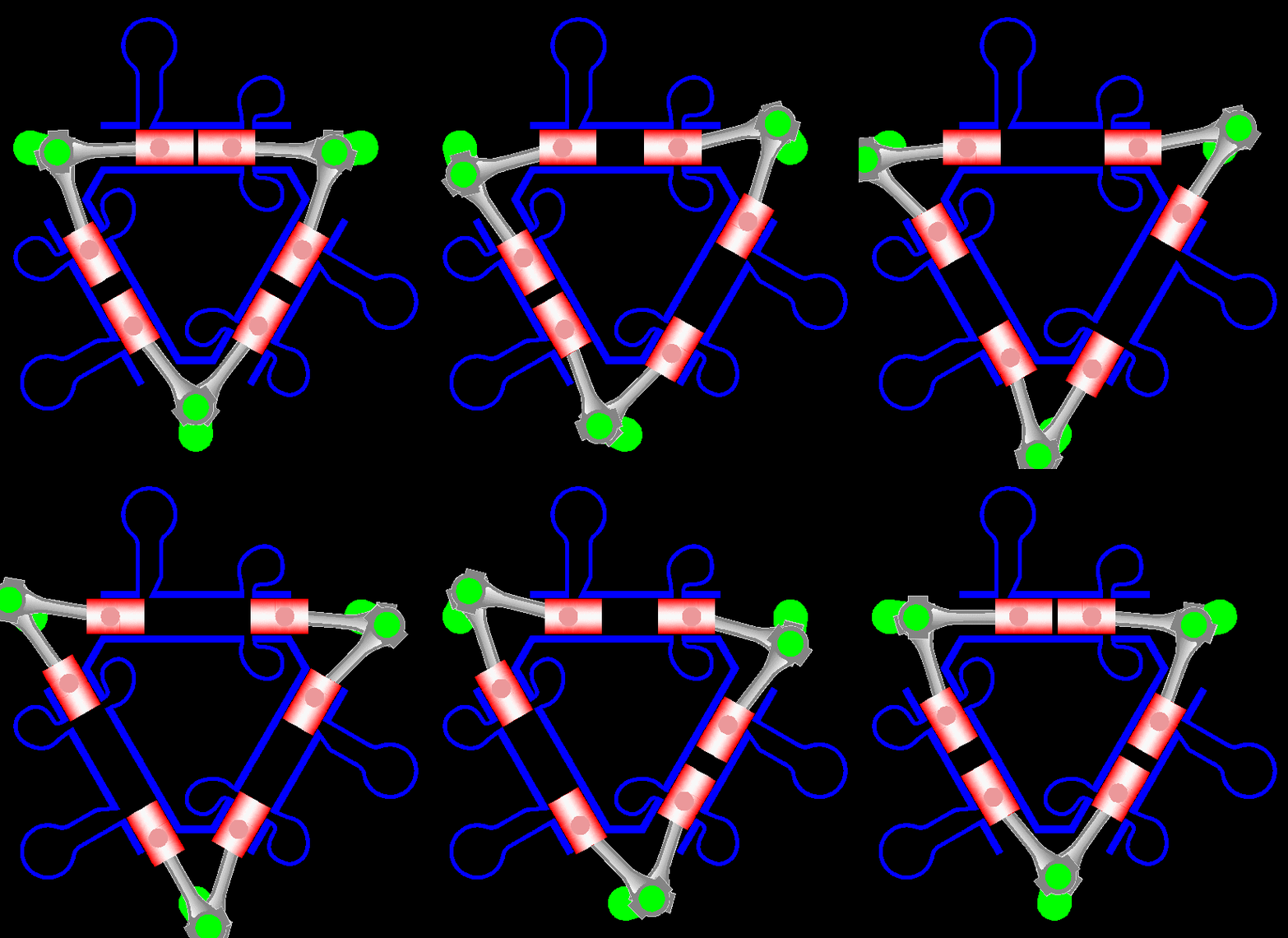
The opposed-piston layout was worked out in the 1930s, part of a broader push to pack as much power as possible into the smallest, lightest package — but Napier’s arrangement of three banks into a self-supporting triangle, all three crankshafts geared together, was its own piece of invention. The geometry gives it exceptional compression efficiency for a two-stroke diesel and a power-to-weight ratio that shamed contemporaries twice its size.
It found its most famous home in British Rail’s Class 55 “Deltic” locomotives through the 1960s and 70s, and its most secretive in the Royal Navy’s fast patrol boats and minesweepers, where the same power-density that suited a railway also suited a hull that needed to get somewhere quickly. Configuration3-bank triangular, opposed-piston Cylinders / pistons18 pistons, 3 crankshafts CycleTwo-stroke diesel Notable usesBR Class 55 locomotives; RN fast patrol boats, minesweepers Signature traitNo cylinder heads — pistons meet mid-tube
03Wankel Rotary
No pistons, no valves in the conventional sense, no reciprocating mass to shake the block apart: a triangular rotor spins eccentrically inside a figure-eight-shaped housing, and each of its three faces sweeps through intake, compression, combustion, and exhaust in turn. The result is compact, light, and — because there’s nothing reciprocating — remarkably smooth.
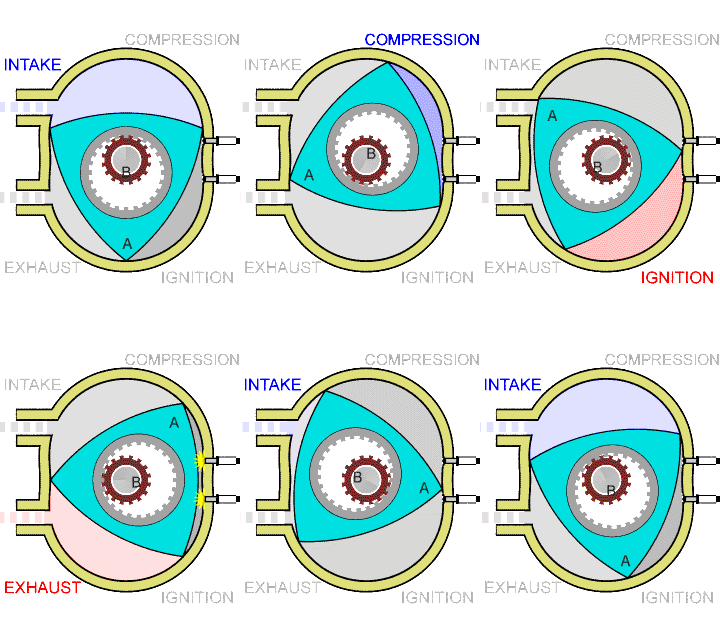
The trade-off is real: apex seals wear, and Wankels are famous for drinking oil deliberately, by design, to lubricate those seals. What they’re less often credited for is graceful failure — a rotary can lose a rotor entirely and keep running, which is part of why the layout found a home in snowmobiles as much as sports cars.
The design scales the same way a piston engine’s cylinder count scales: single-rotor units for small, light applications, and multi-rotor engines — two and three are common, and four has been built — for more power without much more bulk. Mazda’s long production run in the RX series is the layout’s best-known showcase. ConfigurationTriangular rotor, epitrochoid housing Moving partsNo pistons, no valvetrain Scalability1–4 rotors, commonly 2–3 Known weaknessApex seal wear, high oil consumption Notable usesMazda RX-7 / RX-8, snowmobiles, motorcycles
04Rolls-Royce Olympus
The Olympus that powered Concorde is really an argument for judging an installation, not just an engine. At supersonic cruise, the counter-intuitive fact is that most of the net thrust doesn’t come from the engine core at all — it comes from the intake, where a system of ramps manages the shockwaves, slowing and compressing the airflow before it ever reaches the compressor.
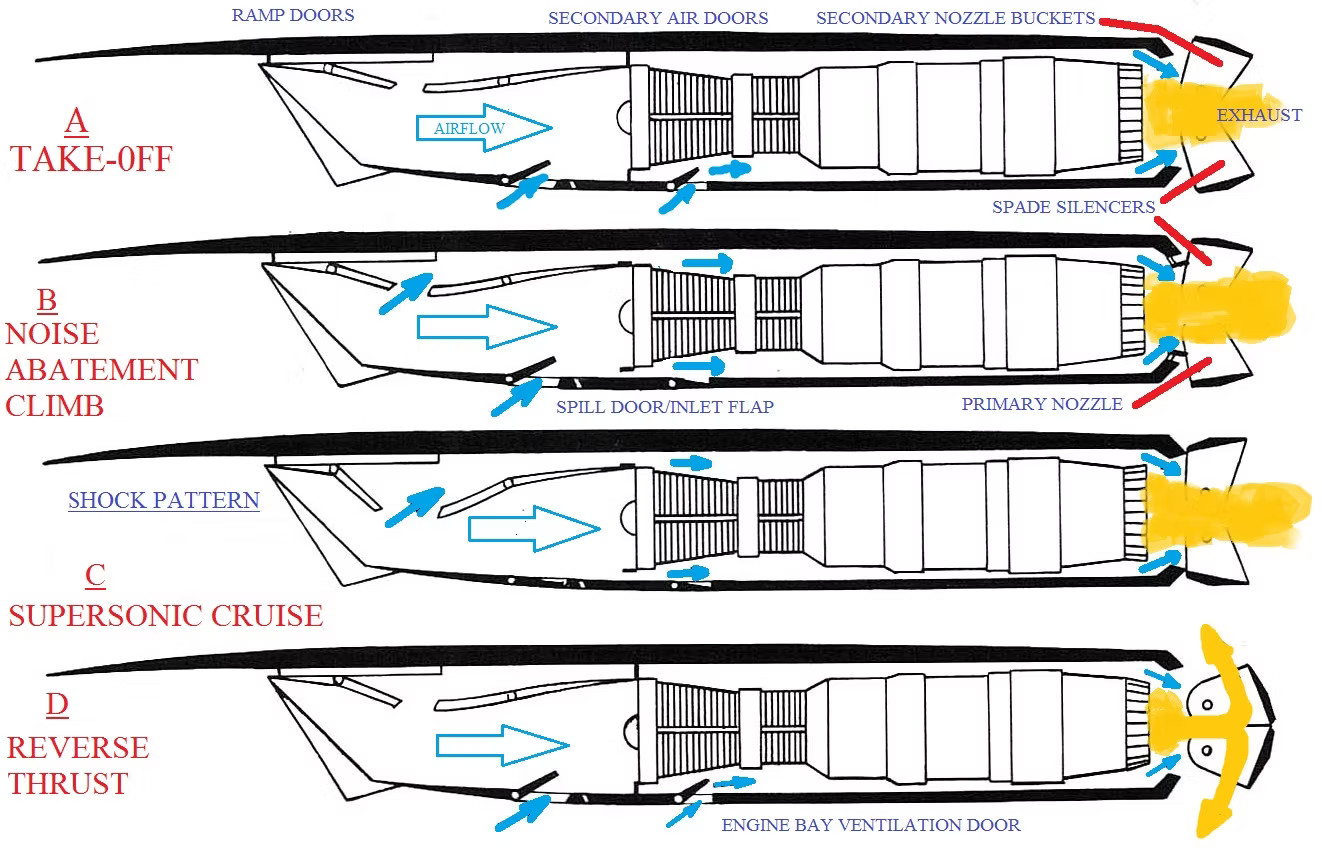
The engine itself, the Olympus 593 with reheat, is a formidable piece of work in its own right. But the family’s reach is the real story: four in a Vulcan bomber, four on Concorde, two planned for the cancelled TSR-2, and — in marine gas turbine form, sharing the same core — four powering each Invincible-class aircraft carrier, in Royal Navy service from the late 1970s into the 2010s and seeing action in the Falklands.
One core, one philosophy of managing air at extreme speed, reused across a bomber, an airliner, a carrier, and a jet that never flew. ConfigurationAxial-flow turbojet, w/ reheat (593) Key insightVariable intake does most supersonic thrust work AirframesVulcan (×4), Concorde (×4), TSR-2 (×2, cancelled) Marine derivativeInvincible-class carriers (×4 each) Service spanLate 1950s to 2010s across variants
05Lancia Narrow-Angle V4
Set against a Merlin or a Deltic this is a small, quiet entry — and that’s rather the point. Lancia’s narrow-angle V4, fitted to the Fulvia through the 1960s and 70s, closes its two cylinder banks to an angle so tight that a single cylinder head can span both of them, something a conventional V engine can’t do.
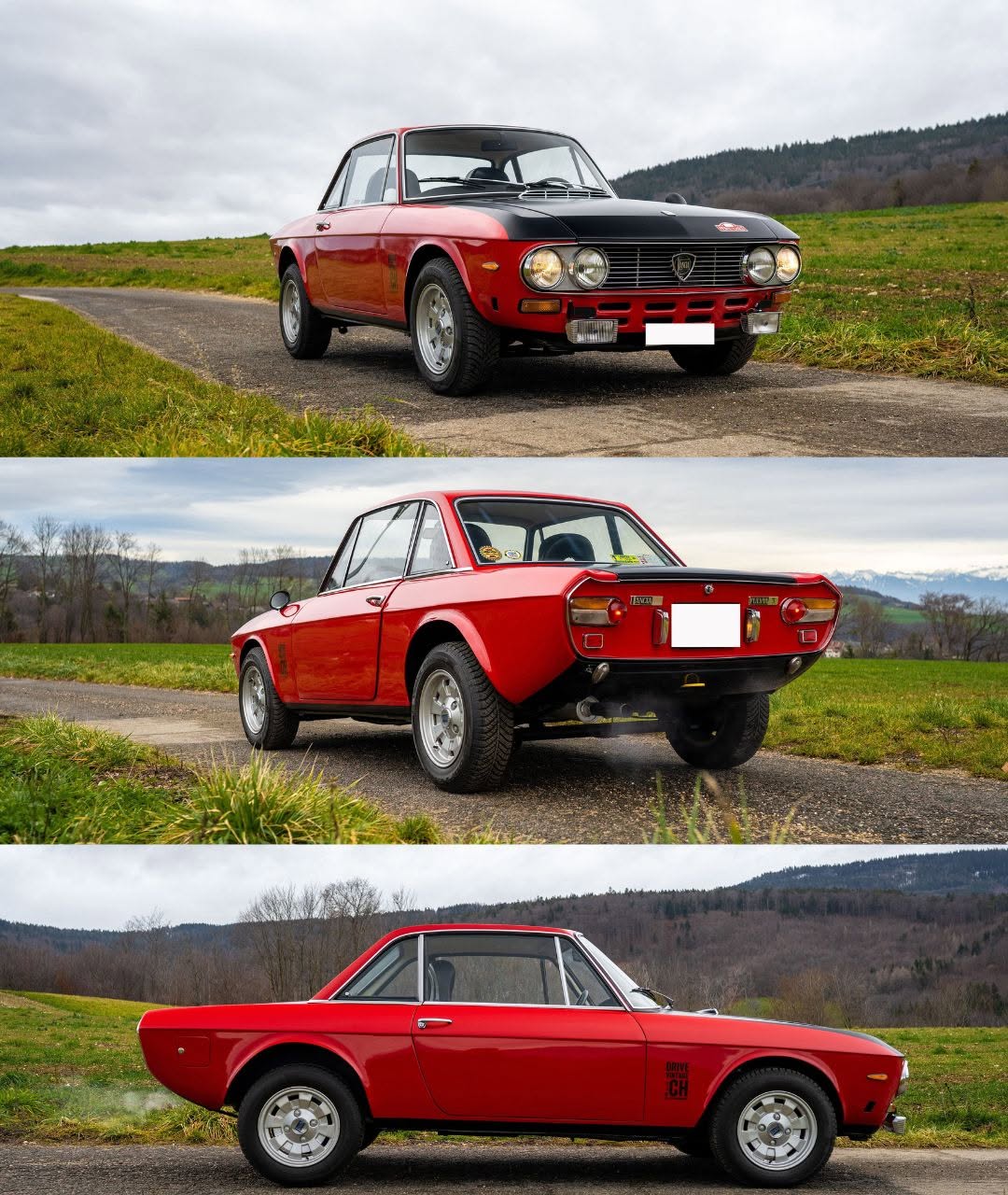
That single head simplifies the top end considerably and keeps the whole unit short and compact, closer in footprint to an inline engine than a V — without giving up the V layout’s inherent smoothness advantage over a straight-four of the same capacity.
It’s not trying to be the most powerful or the most extreme thing on this list. It’s a small manufacturer solving a packaging problem with real elegance, and it deserves to be remembered for exactly that. ConfigurationV4, ~13° included angle Cylinder headSingle head spanning both banks Notable carLancia Fulvia Why it’s hereElegance of packaging, not brute force
Reciprocating, rotary, turbine
Each of these is a different answer to the same question: how much power can you extract from a given size and weight, and how far can you push the geometry before something else breaks. The Merlin pushed the reciprocating V engine to its ceiling right before the turbine took over the sky the Olympus proves the point on. Five very different ways of solving the same problem — and five of my favourites.



Leave a Reply